

Local SEO: how to be visible when you are a tradesperson or freelancer?
Local SEO for tradespeople: business profile, local pages, reviews, proof and tracking to be visible to customers in your area.

Sur cette page5 sections
When you are a tradesperson or freelancer, being visible everywhere is not necessarily the goal. The challenge is above all to be found at the right time, by people who are actually looking for the service offered in the right geographical area.
A plumber, a photographer, an electrician, a beautician or a construction professional does not need to attract visitors from the other side of the country if their activity relies on local interventions. They must help search engines and customers understand what they do, where they operate and why they can be trusted.
Short answer: local SEO relies on a consistent and credible presence. Google occupies a special place thanks to Search and Maps, but other engines, directories and platforms can complement visibility. The listing must represent reality, the site must explain services and areas covered, proof must reassure and results must be tracked over time.
Google and other local visibility channels
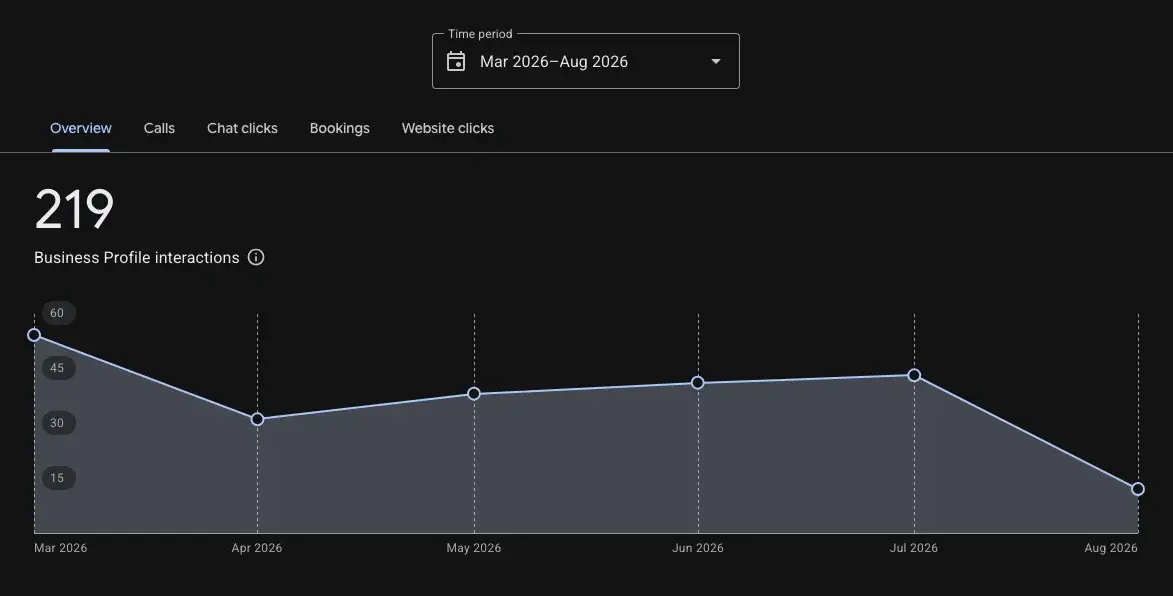
Google is not the only search engine, but its business profile brings together two important touchpoints for a local business: search results and Maps. It can show the name, category, opening hours, reviews, photos, telephone number, website and possible actions.
Other services also offer local listings or directories. Bing Places, social networks and certain professional directories can complement the presence when they are actually used by the clientele. They do not replace the Google listing and should not lead to copying different information everywhere. The best approach is to prioritise channels that bring in qualified contacts, while keeping information consistent across the chosen platforms.
The business profile is not the website. It serves as an entry point: it allows the activity to be discovered quickly, then services, achievements and contact methods to be checked on the site.
The business profile must represent the real activity
A useful listing starts with accurate information. It should include the name actually known to customers, a category that describes the activity, a phone number controlled by the business, an accessible website, up-to-date hours, a simple description of services and photos that match the trade. Suggested edits should also be monitored to quickly correct inaccurate information.
Google recommends representing the business as it exists in reality, maintaining an accurate address or service area and creating only one profile per establishment. Artificially adding keywords to the name or multiplying listings for the same activity can create confusion instead of improving visibility.
To check the profile without making it artificial, you can verify the following elements:
- the name, category, phone number, website, hours and photos correspond to the activity actually offered;
- the address is displayed only if it actually receives customers, while a mobile business provides a realistic service area;
- the description, services and posts explain the trade in understandable words;
- reviews receive sober responses and sensitive information is handled privately;
- updates are made when the phone number, hours, services or area change.
Tradesperson with premises or mobile tradesperson
Not all tradespeople receive their clients at an address open to the public. Some work from a workshop, travel to private homes or work on building sites without hosting visitors.
An establishment that receives customers can display its address and specify its service area if it also travels. A local service business that does not receive customers should instead indicate a service area corresponding to the trips actually offered. A home address or an address that does not receive the public should not serve as a false storefront.
A service area that is too large attracts requests that are impossible to honour and can degrade the experience. An area that is too vague does not allow the customer to know if the company actually operates at their location. It is better to announce a realistic sector in the listing, then explain the main towns and travel conditions on the website.
A living profile, reviews and useful content
A correctly completed profile should not be abandoned after its creation. Hours, phone number, website, services and service area must remain accurate. Recent photos, occasional posts and responses to reviews show that the listing still corresponds to a real activity. This does not guarantee a better position for every search, but it makes it easier to understand the business and limits errors when a customer is looking for a professional.
Reviews should be requested after a real experience, in a simple and free manner. You should not reserve the request for satisfied customers only, nor offer a discount, gift or advantage in exchange for a review, modification or deletion of a negative review. A short, human and precise response is preferable to an advertisement or a defensive reply.
Trade-specific content can extend the work of the listing. An article explaining a site constraint, a choice of solution, a maintenance method or the process of an intervention can answer a real question and create a natural link to a service page. The listing attracts attention; the content helps the visitor to understand and project themselves.
The website turns proximity into trust
The listing attracts attention, but the website must answer the questions that determine contact. The visitor must understand the service offered, the type of customer supported, the area covered, verifiable expertise, the process of a request and how to reach the company.
A general home page is not always enough. A tradesperson can organise their site around an introduction, service pages, a portfolio page, a service area page and a contact page. The goal is not to create a page for every town at top speed, but to provide the right information at the right level of detail.
NAP information: keeping the same reference points
We often talk about NAP, for Name, Address, Phone. In practice, it is useful to associate the service area, opening hours, website URL and a short description of the activity.
This information must remain consistent between the business profile, the website, social networks and the directories actually used by the business. A minor difference in presentation is not necessarily a problem. On the other hand, an old number, an abandoned address, contradictory hours or several trade names can create doubt for the customer.
An internal reference sheet helps to keep the exact trade name, the legal name where necessary, the main phone number, any reception address, the towns served, the hours, contact links and priority services. It avoids copying old information when creating a profile or page and facilitates updates when the activity evolves.
Local proof and sector pages
Two companies can offer the same service in the same area. The customer will more easily choose the one that allows them to project themselves and check that the intervention matches their need. Real photos, case studies, testimonials linked to a service, relevant qualifications and explanations of the working method are all useful pieces of evidence. They must remain concrete and respect client confidentiality.
A local page can be relevant when it brings information specific to the sector: access conditions, type of housing, customer habits, travel constraints or work actually carried out. A page almost identical to another, with only the name of a town replaced, is difficult to maintain and of little use to the visitor. Local content must therefore explain a field reality, not just repeat a keyword.
Measuring without confusing tools
Local SEO is not managed solely by average position. A company can be visible for a query and receive no calls; it can also generate more requests with a clearer page and a less spectacular position.
Google Business Profile gives a reading of presence in Google environments. Search Console helps to understand Web searches that lead to the site. Matomo or another measurement tool then allows you to observe journeys, pages viewed, forms and conversions on the site. The interfaces do not have the same scope: their indicators must be read separately before being compared.
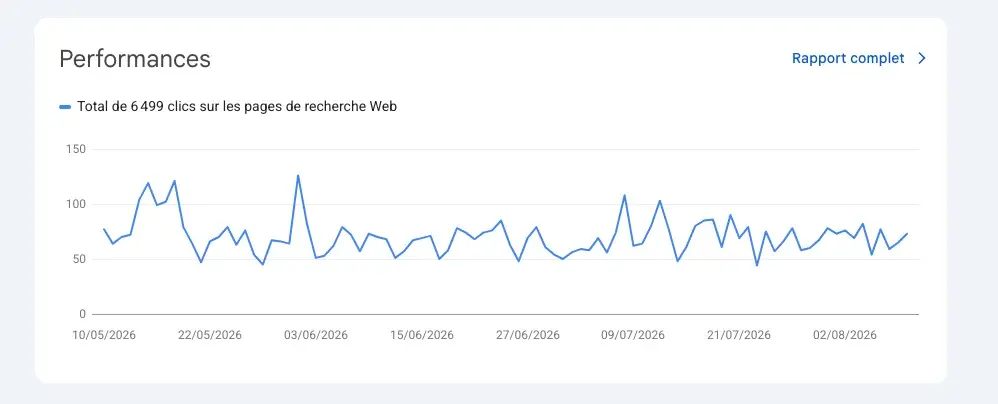
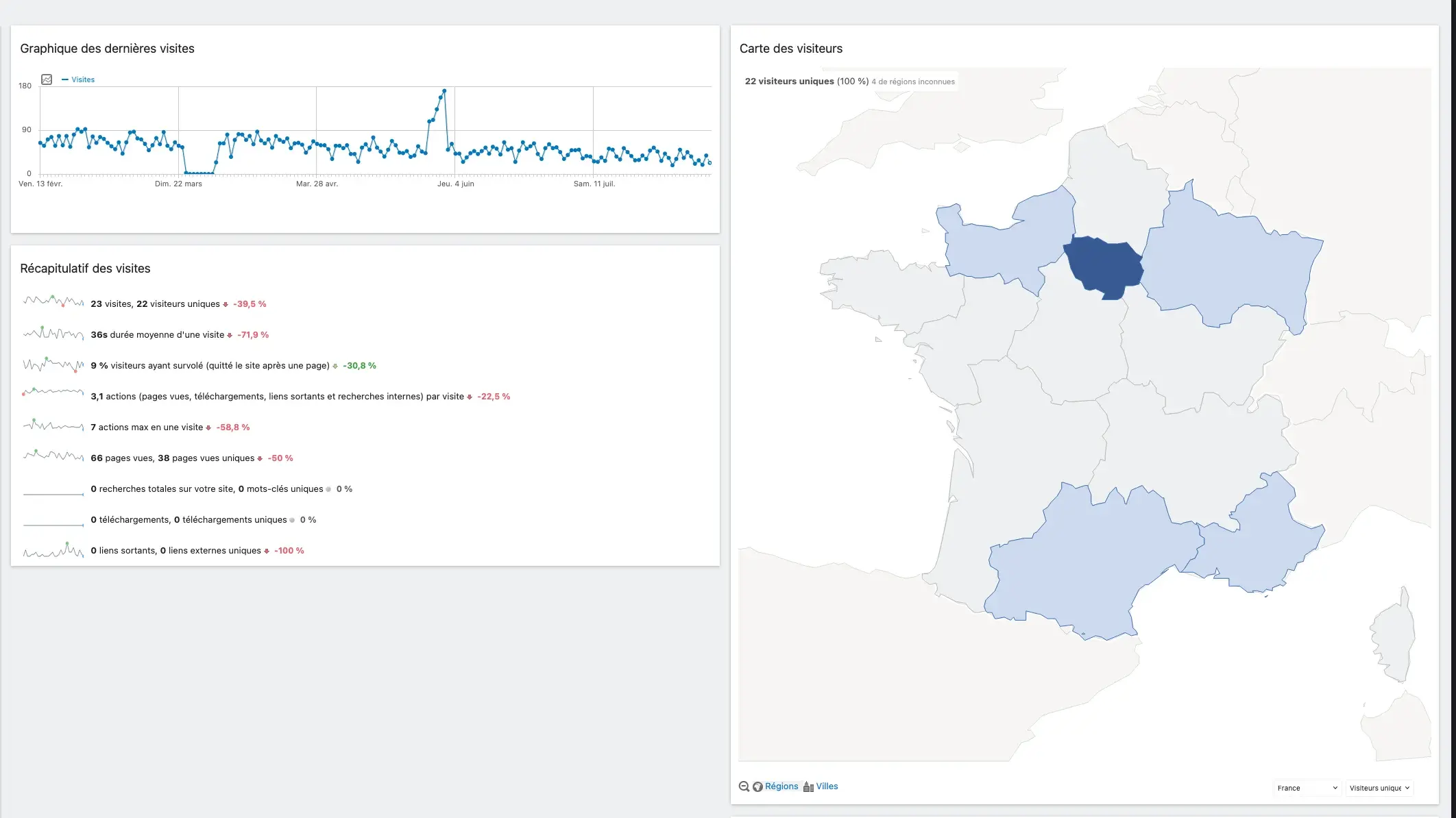
To avoid misleading comparisons, three principles should be remembered:
- a profile view, a web search and a site visit do not describe the same event;
- exposure or consultation does not in itself constitute a conversion;
- calls, quote requests, forms and actually qualified contacts remain the most useful signals for managing the activity.
Then compare consistent periods and take into account seasonality, local campaigns, closures, schedule changes and site evolutions. A small grid followed regularly is better than a complex audit that is never read.
From measurement to action
Measurement is only of interest if it helps in decision-making. If visitors cannot find the phone number on mobile, make contact more visible. If a page explains a service poorly, add a concrete example and an answer to common objections. If requests received do not match the announced area, clarify travel conditions in the profile and on the site. If a question comes up often, turn it into useful trade content.
The linking between service pages, achievements, trade content and local pages must remain natural. To delve deeper into signal reading and associated actions, also consult the Cadarsir guide on website statistics.
Conclusion: being visible locally means being understandable and credible
Local SEO for a tradesperson is not just about adding a town name to every title. It consists of making the activity understandable for search engines and reassuring for customers: a profile consistent with reality, a site detailing services, useful trade content, verifiable proof, honestly obtained reviews, consistent information and regular measurement.
Google may be the priority starting point thanks to the complementarity of Search and Maps, but a solid local presence remains consistent beyond a single platform. The customer should find the same activity, the same contact details and the same level of trust wherever they look.
At Cadarsir, the objective of local SEO support is to link these elements: a clear site structure, a correctly followed profile, useful content, proof adapted to the trade and tracking oriented towards the requests actually received. SEO should not be an abstract promise; it should help a local business to be found, understood and chosen.
Official sources consulted
Google — Guidelines for representing your business; Google — Manage your service areas; Google — Tips for getting more reviews; Google — Understand business profile performance; Google Search Central — Structured data for local businesses; Bing Places for Business.
Platform guidelines can evolve. Check the rules applicable at the time of creating or modifying a profile.