
Does my restaurant need a bespoke business tool?
When your restaurant outgrows standard software, a bespoke business tool can follow your service rules. Call Romain to discuss your project.
Sur cette page6 sections
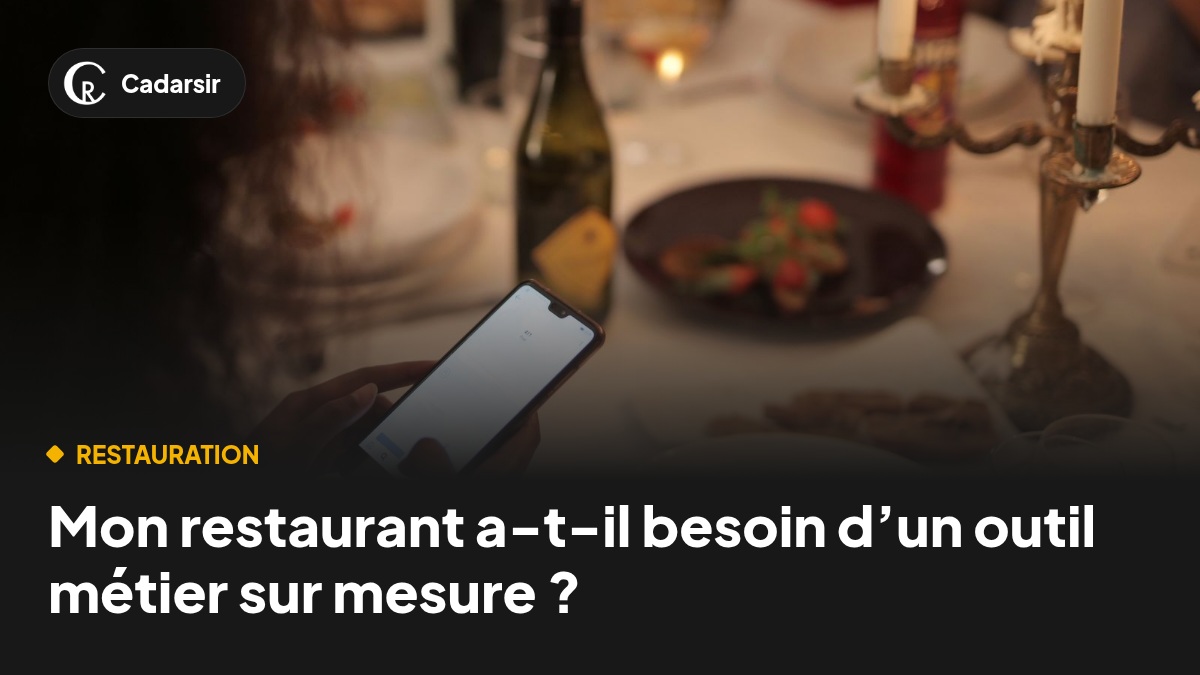
In this fictional example, Léa runs a restaurant that hosts a weekly music event. One Friday, a customer picks a slot for that same evening. The booking tool doesn't display the event. Léa has to call the customer herself to let her know. The booking is recorded, but what makes the evening special remains missing from the journey.
This small discrepancy sums up a question many restaurateurs ask: does their tool truly follow the way they work, or does it ask them to bypass their own rules?
Who should adapt: Léa or her tool?
In the short term, Léa is the one compensating. She picks up the phone, repeats information the tool didn't show, and explains to the customer what they should have been able to discover when choosing. For one evening, this might just be a minor detour. But the event happens every week. Little by little, it's up to Léa to change how she manages requests to fit the path intended by her software.
The mismatch doesn't come from poor organisation on her part. Léa knows her service; she knows what sets this evening apart from an ordinary Friday. It is precisely this business rule that the tool doesn't know how to represent. When the activity deviates from the planned scenario, people are too easily asked to bridge the gap themselves: call a customer back, pass on an instruction, check information, or keep a detail in mind. Yet, if the same rule recurs, it's reasonable to ask why the team should continue to adapt to the tool, rather than the other way around.
A restaurant doesn't work "by default"
A booking isn't always just a date, a time, and a number of covers. Depending on the establishment, service can depend on an event, a specific floor plan, a group, or changing hours. The team might also need to share an instruction before the customers arrive. These aren't necessarily extraordinary requests: they are simply part of how the house runs.
Software designed for many establishments must offer rules common enough to suit many situations. This is what makes it practical when service follows a classic flow. But the standard journey is not a measure of the business's value. If a restaurant regularly organises events, hosts groups, or operates with multiple room configurations, its rules aren't whims to be hidden to simplify the screen. They explain how the team works.
In Léa's case, the question isn't just whether the "book" button works. You also have to look at what the customer understands before choosing, what the team needs to prepare, and what information needs to circulate for the booking to make sense. If these elements are only visible after a call, the tool may have recorded the request, but it hasn't followed the whole situation.
Léa's scenario is fictional; Le Coq Noir was actually in this situation. The restaurant trusted me to develop a management tool that now follows its rules, so that its team no longer has to adapt to the tool. The case illustrates this approach, without claiming that the same functions would suit every establishment.
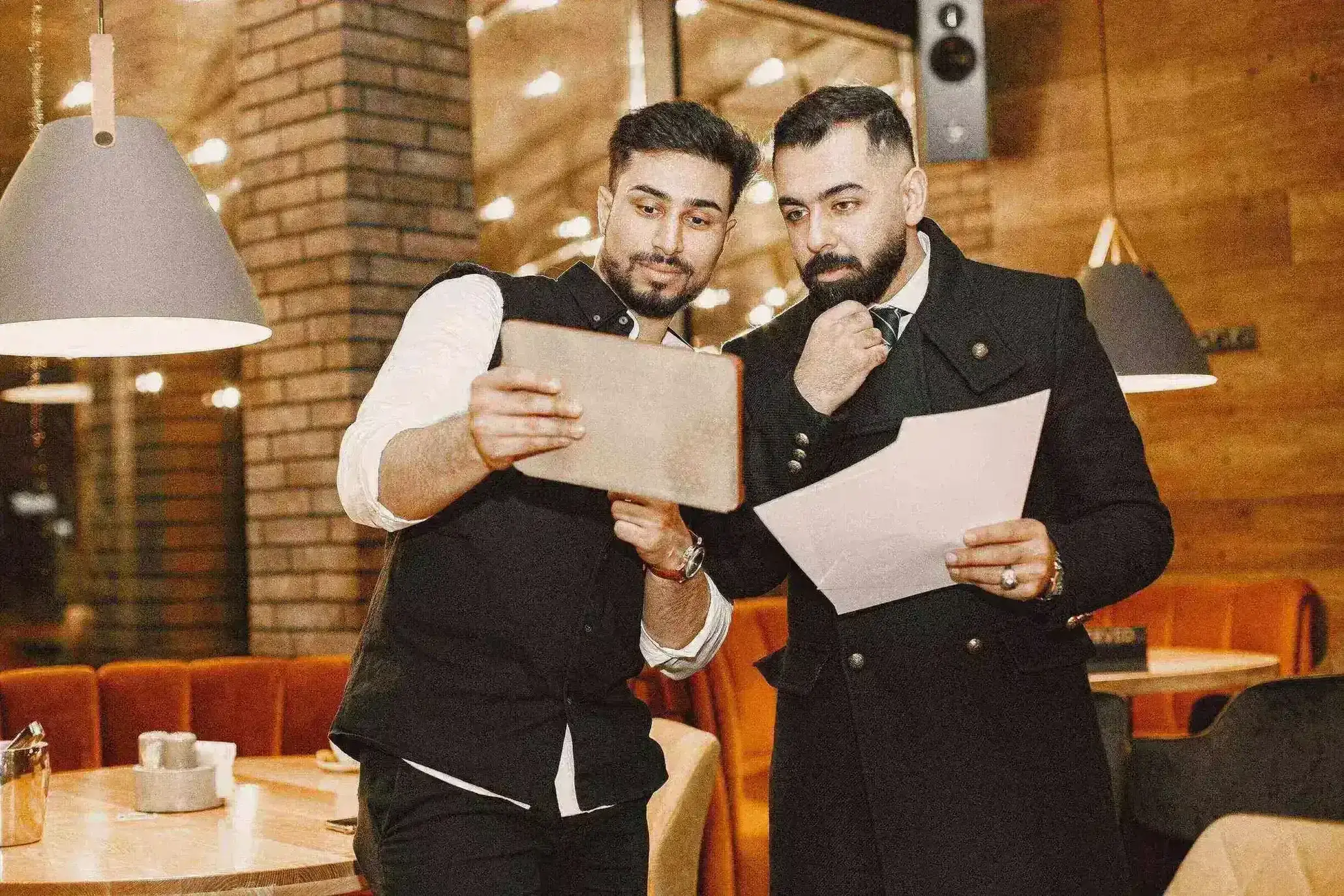
When exceptions become the real journey
A one-off exception can be handled manually without revealing a lasting problem. What deserves attention is repetition. If Léa calls every week to explain the same event, the call is now part of the process, even if no screen accounts for it. The rule exists in her business; it simply remains outside the tool.
This type of detour often seems harmless when taken separately. Someone adds a note, checks a booking, warns a colleague, or finds information in another document. But these actions add up and sometimes depend on the person who already knows the story. A new person on the team might not think of the same check. An instruction might also be passed on too late, or no longer match the day's situation. These aren't certain consequences at every service; it's the risk of an organisation that relies on scattered information.
The problem can be spotted by observing actual work rather than relying on a list of features. At what point does someone leave the journey? What information needs to be repeated? Who knows it, and who needs it before confirming the request? If the answer relies mostly on Léa's memory, it's not a matter of personal discipline. It's a signal that the tool doesn't support an important rule.
The right tool follows the useful rules of your service
Saying a tool must adapt to the business doesn't mean every restaurant needs entirely new software. A standard solution can work if its settings truly cover the service rules. In some cases, a link with another tool is enough to get the information flowing at the right time. The important thing is not to confuse a feature present in the menu with a journey that works for the team.
Conversely, when a rule recurs every week and the team always has to bypass it, the subject deserves to be addressed starting from that rule, not by asking Léa to better memorise her own instructions. A bespoke business tool can then be designed around the steps actually followed: the information to be collected, when it should appear, the people who modify it, and the recurring exceptions. The goal isn't to add features to fill a list, but to make work more consistent with the restaurant's organisation.
The scope doesn't need to be decided in advance. Maybe only one process needs adapting; maybe several steps are linked. First, we need to understand what happens during service, what the team has to manage outside the software, and what customers need to know. From these elements, we can design a useful response, without promising a complete solution before understanding the need.
Starting from the way you work
To clarify the situation, take a request that comes up often and tell the story from start to finish. In Léa's case, we could follow the event announcement, the slot choice, the booking, and then the team's preparation. Where does the information appear? Who has to check it? What forces Léa to step back in? This narrative is more useful than a long checklist because it shows the transitions between people and tools.
The same exercise also helps distinguish a preference from an operational rule. A rare request doesn't necessarily justify development. A central instruction that recurs at every service deserves to be taken seriously. We can then define what the tool should do, what information must remain accessible, and where human intervention still makes sense. The software doesn't replace the team's judgment; it can avoid asking them to repeat or reconstruct what should already be visible.
Ultimately, the right question isn't "how do I fit my restaurant into the software's boxes?" It is rather: "what rules of my business must the tool follow so that the team can do their job as planned?" This difference changes the starting point. We no longer start from a catalogue of functions, but from the reality of the service.
Let's talk about the tool you need
If your team regularly adapts its organisation because the software doesn't follow its rules, call me. We will talk about the way you work and the bespoke business tool that could support it. I prefer to start from what your restaurant actually has to manage, then define a tailored solution with you, rather than letting you search alone for a setting that might not match your needs.